Silver Jewelry Pricing Breakdown
Jul 21,2026 | Deechy
When you receive a wholesale quote for 925 sterling silver jewelry, the unit price is just a number. Understanding what's behind that number — and what factors drive it up or down — gives you real negotiating power and helps you make smarter sourcing decisions.
This guide breaks down every cost component in a silver jewelry wholesale price, explains what drives variation between suppliers, and shows you how to evaluate whether you're getting fair value.
The Core Components of a Silver Jewelry Price
A factory-direct wholesale price for 925 sterling silver jewelry is built from several layers of cost:
1. Raw Silver Cost
Silver is a commodity traded on global markets. The price fluctuates daily, and it directly affects the raw material cost in every piece.
925 sterling silver is 92.5% pure silver. A piece weighing 5 grams contains approximately 4.6 grams of pure silver. At current silver prices, the raw material cost in a 5-gram piece is roughly $0.30–$0.50.
Raw silver cost is a relatively small portion of the total unit price for most pieces — labor and finishing costs typically dominate. However, for heavier pieces (thick chains, large pendants, statement cuffs), silver content becomes more significant.
2. Labor Cost
Labor is usually the largest single cost component in silver jewelry, particularly for handcrafted, stone-set, or complex designs.
Labor costs cover:
- Wax model and mold preparation
- Casting
- Filing and polishing
- Stone setting (the most labor-intensive step for stone-set pieces)
- Assembly (clasps, jump rings, chains)
- Quality control inspection
A simple polished pendant might require 10–15 minutes of skilled labor. A complex multi-stone ring could require 45–60 minutes. This difference in labor time directly translates to unit price.
3. Stone Cost
For pieces with gemstones, the stone cost varies enormously depending on type, size, cut, and quality:
| Stone Type | Approximate Cost per Stone (3mm round) |
|---|---|
| Cubic Zirconia (CZ) | $0.05–$0.20 |
| Lab Opal | $0.30–$1.00 |
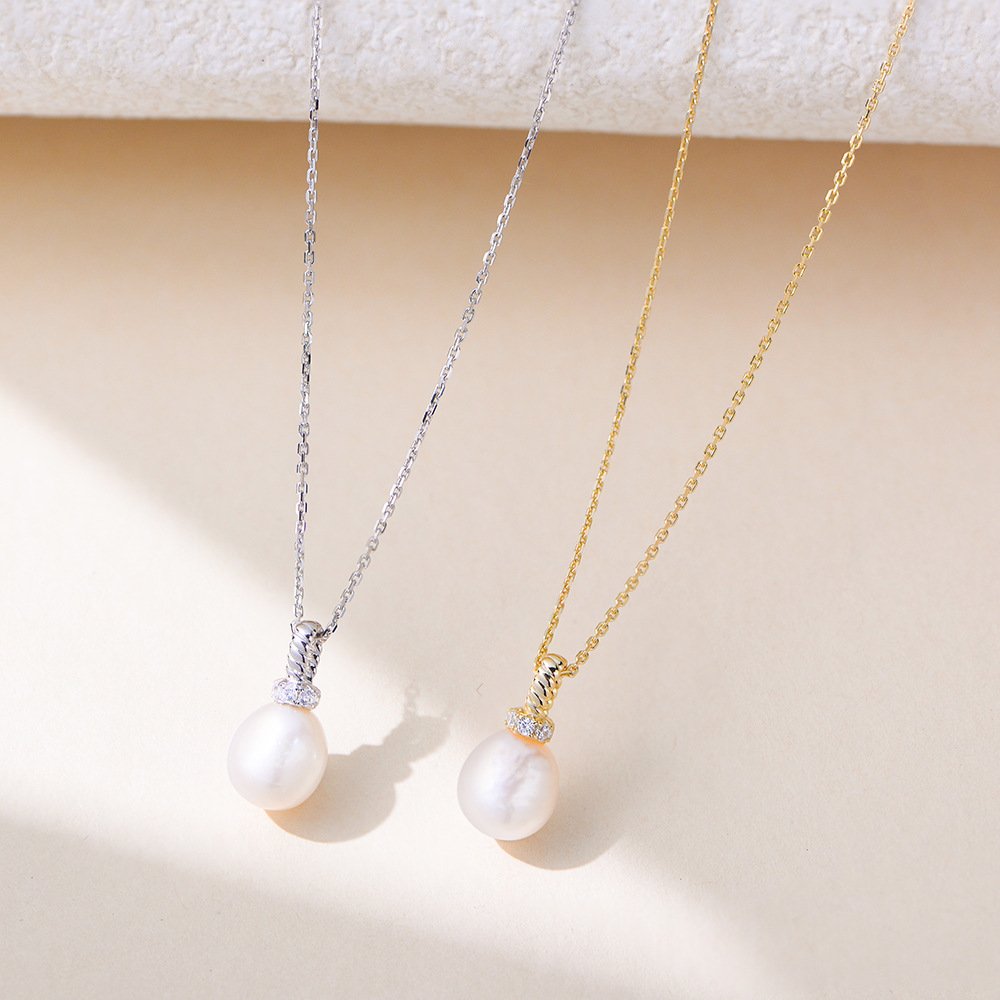
| Freshwater Pearl (small) | $0.20–$0.80 |
| Agate (cabochon) | $0.30–$1.50 |
| Jade | $1.00–$10.00+ |
| Moissanite | $5.00–$30.00+ |
A CZ-set pendant with 10 small stones adds roughly $0.50–$2.00 in stone cost. A moissanite solitaire pendant could add $10–$50+ depending on carat weight.
4. Plating Cost
Plating adds cost that varies by type and thickness:
- Rhodium plating (standard for white silver finish): $0.20–$0.50 per piece
- 18K gold plating: $0.30–$0.80 per piece
- Rose gold plating: $0.30–$0.80 per piece
- Black rhodium: $0.30–$0.60 per piece
Thicker plating (higher micron specification) costs more but lasts significantly longer. Always ask for the micron thickness in your quote — this is where corners are cut by lower-quality suppliers.
5. Tooling and Mold Amortization
For custom designs, the initial mold cost ($50–$200) is typically charged separately as a one-time fee. For catalog designs, the tooling cost has already been amortized across previous orders and is built into the unit price.
This is one reason why ordering from a factory's existing catalog is cheaper per unit than custom designs — you're not paying for new tooling.
6. Quality Control and Overhead
Professional factories include QC costs in their unit price. This covers the labor and equipment time for inspection at each production stage — magnification checks, XRF testing, stone setting verification, plating thickness measurement, and pre-shipment inspection.
Factories with minimal QC have lower apparent unit costs but higher effective costs once you factor in returns, replacements, and damaged customer relationships.
7. Packaging and Documentation
Certificates of authenticity, jewelry pouches, gift boxes, and branded tags all add cost. At Deechy Silver Jewelry, the S925 stamp and logo engraving on chain tags are included in the unit price. English-language certificates are available at a small additional cost per piece.
What Drives Price Variation Between Suppliers
Given the same design, why might two suppliers quote significantly different prices? Here are the most common reasons:
Material substitution
The cheaper quote may be for silver-plated brass rather than solid 925 sterling silver. Always confirm the base metal explicitly.
Stone quality differences
Lower-grade CZ, smaller stones, or machine-set vs. hand-set stones all reduce cost — and quality.
Thinner plating
A thinner micron plating looks identical to a thicker one out of the box but wears significantly faster.
Less QC
Fewer inspection steps means lower per-unit cost but higher defect rates.
Trading company markup
A supplier who is actually a trading company (middleman) adds their margin on top of the factory price. Factory-direct buying eliminates this layer.
Factory scale and efficiency
Larger, more efficient factories with established workflows can produce more consistently at lower cost than smaller operations. This is often reflected in more competitive pricing on standard catalog styles.
How to Evaluate a Quote
When you receive a wholesale quote, ask for a breakdown that includes:
- Unit price — confirmed to be for solid 925 sterling silver
- Stone specification — type, size, grade
- Plating specification — type and micron thickness
- What's included — S925 stamp, logo engraving, certificate
- Sample fee — and whether it's refundable against first order
- Mold fee — for custom designs, as a separate line item
- Shipping estimate — to your destination
A factory that can't or won't provide this breakdown is a factory that has something to hide in their pricing.
Typical Price Ranges for 925 Sterling Silver Jewelry
To give you a reference point for factory-direct wholesale pricing from a Guangdong manufacturer:
| Category | Typical Wholesale Range |
|---|---|
| Simple chains (no stones) | $2.50–$8.00 |
| CZ pendant necklaces | $4.00–$12.00 |
| Moissanite pendant necklaces | $15.00–$45.00 |
| CZ stud earrings | $3.00–$8.00 |
| Freshwater pearl pieces | $5.00–$18.00 |
| Jade set pieces | $8.00–$30.00 |
| Lab opal pieces | $6.00–$20.00 |
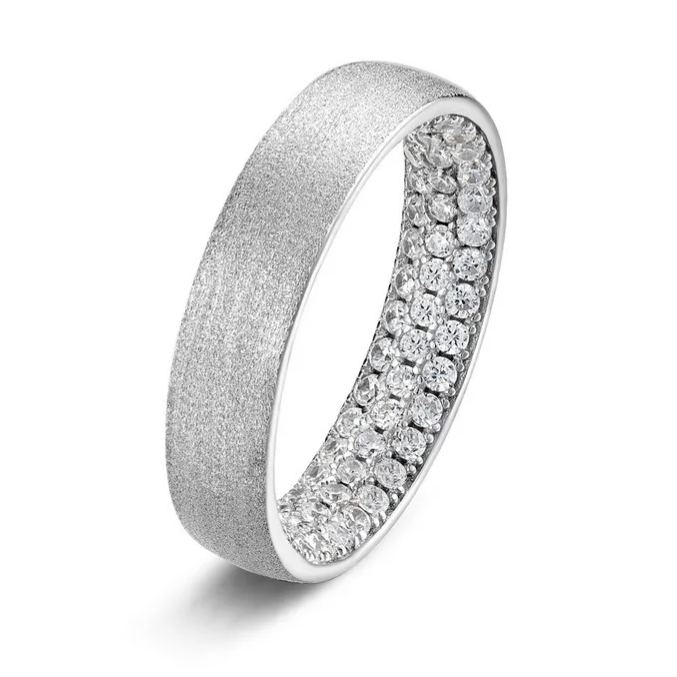
| Plain bands/rings | $3.00–$10.00 |
| Stone-set rings | $5.00–$25.00 |
These ranges assume factory-direct pricing with no middleman markup, solid 925 sterling silver base, and standard plating.
Retail Pricing and Margin Structure
For brand owners building a pricing strategy, here's a typical margin structure:
| Cost Component | Example |
|---|---|
| Factory wholesale unit cost | $6.00 |
| Shipping (per unit) | $0.40 |
| Packaging and certificate | $0.80 |
| Payment processing (3%) | $0.22 |
| Total landed cost | $7.42 |
| Retail price (4x markup) | $29.68 → $29.00 |
| Gross margin | ~74% |
A 3–5x markup on total landed cost is standard for fashion and demi-fine jewelry brands. Higher-end positioning can support 6–8x on pieces with strong design differentiation.
Why Factory-Direct Always Wins on Price
Every layer between you and the factory adds cost without adding value to the product. A trading company that sources from a Guangdong factory and sells to you charges 15–30% more than the factory's direct price — for the same product.
At Deechy Silver Jewelry, our pricing is factory-direct: no trading company markup, no middleman margin. You're buying at the source, which means your unit cost is as low as it can be while still getting a professionally manufactured, QC-inspected, certified 925 sterling silver piece.
Frequently Asked Questions
What is the typical wholesale price for 925 sterling silver jewelry from China?
Factory-direct wholesale prices for 925 sterling silver jewelry from Guangdong manufacturers typically range from $2.50 for simple chains to $45+ for moissanite-set pieces, depending on design complexity, stone type, and quantity.
Why are some silver jewelry quotes much cheaper than others?
Cheaper quotes often reflect material substitution (silver-plated brass instead of solid 925 silver), thinner plating, lower stone quality, or less rigorous quality control. Always confirm material specifications before comparing prices.
Does ordering larger quantities significantly reduce the unit price?
Yes. Most factories offer tiered pricing — the unit price at 100 pieces is meaningfully lower than at 10 pieces. Request a tiered price sheet to understand the quantity thresholds.
What is a typical profit margin for silver jewelry brands?
Gross margins of 65–80% are typical for jewelry brands sourcing factory-direct from China, using a 3–5x markup on total landed cost. Higher margins are achievable at scale with stronger design differentiation.
Should I pay a sample fee before placing a bulk order?
Yes. Sample fees are standard practice and protect both parties. At Deechy Silver Jewelry, sample fees are typically credited against the first bulk order.
*Deechy Silver Jewelry is a factory-direct 925 sterling silver wholesale manufacturer in Guangdong, China. Transparent, itemized pricing with no middleman markup. Visit deechysilverjewelry.com to request a wholesale quote.*
Frequently Asked Questions
What is the typical wholesale price for 925 sterling silver jewelry from China?
Factory-direct wholesale prices typically range from $2.50 for simple chains to $45+ for moissanite-set pieces, depending on design complexity, stone type, and quantity.
Why are some silver jewelry quotes much cheaper than others?
Cheaper quotes often reflect material substitution such as silver-plated brass instead of solid 925 silver, thinner plating, lower stone quality, or less rigorous quality control.
Does ordering larger quantities significantly reduce the unit price?
Yes. Most factories offer tiered pricing. The unit price at 100 pieces is meaningfully lower than at 10 pieces. Request a tiered price sheet to understand the quantity thresholds.
What is a typical profit margin for silver jewelry brands?
Gross margins of 65–80% are typical for jewelry brands sourcing factory-direct from China, using a 3–5x markup on total landed cost.
Should I pay a sample fee before placing a bulk order?
Yes. Sample fees are standard practice and protect both parties. At Deechy Silver Jewelry, sample fees are typically credited against the first bulk order.
논평